
Drifts of bright blue flowers that spill from beds or turn the lawn into a sea of blooms in very early spring -- it sounds like a dream come true for any gardener after a long, gray winter. And while the blooms of squill are definitely dreamy, there are a few things to keep in mind to prevent them from turning into a gardening nightmare.
Siberian Squill, or Scilla
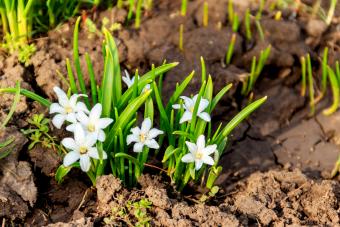
Siberian squill is native to Russia and Eurasia, making them ideal for cold climates. They bloom in early spring in shades of white and blue, and the short, grass-like foliage of these hardy bulbs makes them perfect for flower borders or for naturalizing in the lawn.

Squill blooms for about two to three weeks in early spring, sometimes even appearing when there's still snow on the ground. They provide nectar for early pollinators, and provide a much-appreciated pop of color before just about anything else is blooming.
Growing Squill in Your Garden
The best way to grow squill is in masses or drifts so they provide a real punch of impact when they're in bloom. The flowers are so small that, individually, they don't really do much. But a large planting of scilla can be absolutely breathtaking.
They're great planted in rock gardens or naturalized in the lawn. Less commonly, they're grown in window boxes or pots, which lets even these tiny flowers shine since you can enjoy them up close.
Another good option is to plant them with tulips or daffodils, since they grow much shorter than the taller flowers.
Planting Squill
Squill bulbs should be planted two to three inches deep and at least six inches apart. Like other spring-blooming bulbs, they should be planted in fall since they need a cold period to bloom.
Water the area well at planting time, and then again toward the end of fall but before the ground has frozen to ensure that the bulbs don't dry out.

Scilla siberica does well in locations as cold as Zone 2. It has grassy foliage in very early spring, which dies back by summer. If you're growing it in a location warmer than Zone 8, you'll need to provide a chilling period (such as in a refrigerator for a few weeks) to get them to bloom.
Squill is also great planted in pots, which helps keep it from spreading.
Light and Soil Requirements
Scilla grows well in sun or light shade. They grow well beneath trees, since the dappled shade provides enough light for them and they're usually finished blooming by the time the tree fully leafs out.
Squill needs well-drained soil, but other than that, it's not overly picky. It grows well in most soil types and most pH levels.
Watering and Fertilizing
Squill does not tolerate dry conditions or hot locations. An inch of water per week is ideal, though more might be necessary if the squill has been planted in a very sunny area or near concrete or pavement, which makes conditions even warmer.
It's not necessary to fertilize squill.
Pruning Scilla
To try to prevent it from spreading too much, consider pruning off the flower heads once they've finished blooming. Otherwise, the plants can be left as-is and do not need to be pruned.
If you've planted squill in the lawn to naturalize, you'll want to refrain from mowing too early in the spring to allow the bulbs to store more energy for next year. If you do mow, set your blade fairly high, around four inches, for the first few mowings of the season.
Squill Pests and Diseases
Crown rot is occasionally a problem for squill, especially if it's planted in an area without good drainage. It doesn't have any pest problems to speak of, and it's even deer and squirrel resistant.
Propagating Squill
Scilla can be easily propagated by bulb offshoots or seed. They naturalize readily in favorable conditions, and many have escaped from cultivation and thrive in the wild.
Beautiful Scilla Varieties to Grow in Your Garden
Scilla is generally available in blue and white, and while there are many plants known as squill, the one most commonly planted for spring bloom is Siberian squill (Scilla siberica). With that in mind, there are a couple of tried-and-true varieties to consider adding to your garden.
Spring Beauty
'Spring Beauty' has intense blue bell-shaped flowers and blooms in early to mid-spring. Each individual bulb produces three to four flower stems, providing more blooms from each bulb. 'Spring Beauty' grows three to six inches tall and has medium green, grass-like foliage.

Alba
'Alba' produces up to six pure white flowers on each stem, and each stem grows to about four to six inches tall. In Zone 5, it blooms in late March through early April, making this a super-early variety.
Is Squill Invasive?
Squill is considered invasive in many areas of the U.S., since it naturalizes so easily and is rarely eaten by animals, which makes it able to out-compete native spring wildflowers. This is less of an issue in a traditional urban or suburban yard where there aren't many places for it to spread to, but if you live near woodlands, it might be a good idea to avoid squill so it doesn't naturalize into the ecosystem and start crowding out native plants.
Non-Invasive Alternatives to Squill
If you want native plants that provide the same beautiful pop of blue in your garden, consider planting Virginia Bluebells or wild blue phlox.

Beautiful and Prolific
Squill is undoubtedly beautiful and low maintenance, but it's worth remembering that it can become invasive given the right conditions. Once you plant squill in your garden, you can be fairly assured that you'll have it (and many more squill plants) for years to come.


